Wednesday, February 19, 2014

BUS572-3

Concept: Knowing When the Keyword is the Right Keyword

     There are four things to consider when choosing a keyword: Search volume; Competition; Propensity to Convert; and Value per Conversion. Each of these concepts gives an important aspect to finding the right keyword. Search volume is how many searchers are using that phrase to find what they want. Competition is how many other web sites out there are targeting that same phrase. Propensity to Convert is the likelihood that the searcher using that key phrase is going to convert on your site. And Value per Conversion is the average value per prospect attracted by the keyword. Without each of these concepts being taken into consideration, there is the potential for a keyword to perform less than expected. To give an example of how this works, say you were looking to set up an advertisement for red stilettos and one of the keyword phrases you wanted to use was 'red pumps'. Search volume would tell you how many people are searching for red pumps, competition would tell you how many other web sites are using that same phrase to attract customers to their sites, propensity to convert tells you the likelihood that a searcher is going to choose your site to look at, and value per conversion is the average value that the keyword is likely to bring to the advertiser. While all of these tools are valuable to writing your keywords, the book does not tell readers how to access this sort of information. Some of these values can be found by using Google Insight, but where do you find the others? Are these four keyword concepts weighted? Meaning is one of them more important than the others, so it should be more of a focus?

Concept: Optimizing Images

     Search engines cannot see what an image is depicting, therefore the search engine relies on keyword descriptors to determine when an image is relevant to a search. Advertisers should optimize their images with keywords in order to ensure that they can be shown when a searcher inputs a relevant keyword in the ad outputs. Using good descriptors for images is also helpful for screen readers which read the image description to visually impaired users. There are several ways advertisers can optimize their images such as: 
  • Use descriptive file names.
  • Use specific alt tags and title attributes for the images.
  • Meta information can be supplied in the image file. Make sure this information is relevant.
  • Use descriptive captions, and keep relevant copy close to the relevant image.
  • Make sure the header tags and images are relevant to each other.
Example of Optimizing an Image Through Keywords:


I wish the book went further into detailing exactly how specific your keywords should be for your image. For example, should it just be a one sentence description, or should it be multiple keywords strung together that all describe the image? It is obvious that it is very helpful to optimize your images for searches, however I am curious for more details

Skill set: Creating Worthy Website Links

     The search engine algorithm determines the relevancy of the referring web site to the site being linked to. By analyzing various things, the engines try to determine if the links are natural links or if they are manipulative, artificial links created solely for ranking purposes. Manipulated links are worth very little compared to natural links and may lead to a drop in search engine rankings. Some sites are more relevant than others to specific terms. The more relevant a site, the more value is transferred by the link. Well-known and established news sites, government sites (.gov), and university domains (.edu) are examples of sites from which links can carry more weight. Knowing how to create links that are more trusted and therefore carry more weight is an essential skill set to any advertiser looking to increase the relevancy of their website. One important way that advertisers can see who is linking to their website versus a competitors through a noncompeting site is by using a free service offered by Site Explorer. This website allows you to see which noncompeting sites are ranking highly for your key phrases. A question that arises is what to do with the information once you have it. If you see that your website is not ranking as highly as a competitors on a specific noncompeting site, how do you go about changing your ranking? Can you adjust your link and keywords and see if that makes a difference? How long should you continue this sort of testing for? I can see how important it would be to know where your website is being linked to often, but how do you go about making corrections for other sites that you would like to rank higher with?

Overall: Search Engine Optimization Keeps Getting More Complicated
     This week definitely added some new fine details to my knowledge of search engine optimization. Most of this information is extremely helpful and I can understand how and when to use the various skills and concepts presented. There were a few times however, like those I spoke of above, where I felt like I was not sure how to implement or interpret some of the skills I was taught. I am hoping in the upcoming weeks to gain some further clarification about how to utilize some of these concepts and skills to the fullest extent. Overall though, I have been able to make massive improvements to my understanding of eMarketing and I am excited to continue learning new skills and refining those I have already acquired.

Monday, February 3, 2014

BUS572 - 2

Concept: The Making of Funnel Vision.

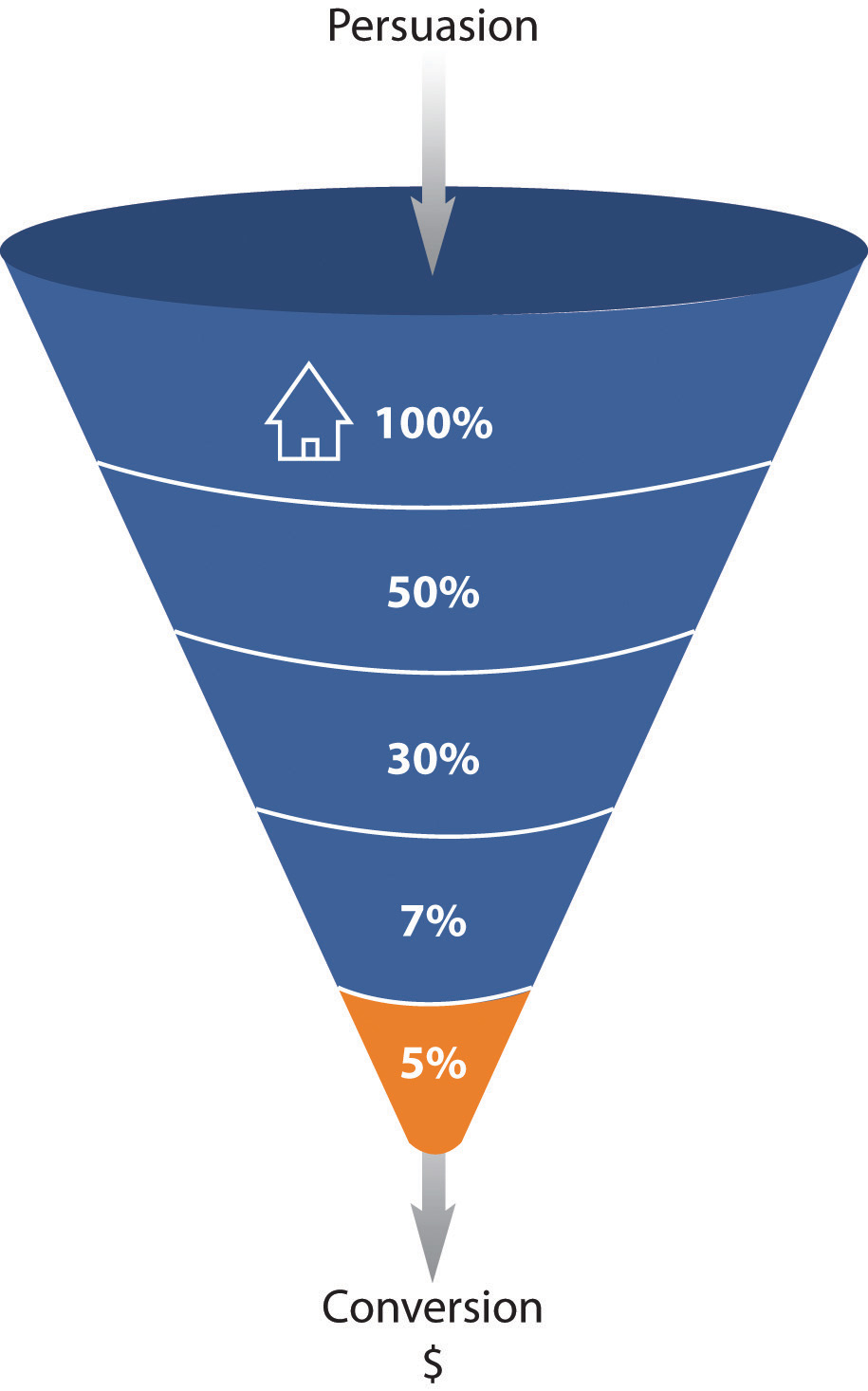
     Week 2's readings brought us more detail about how exactly you can optimize your website and increase your click-through rate (aka increase the amount of people buying stuff from you!). With this optimization comes funnel vision. In reality, it's called funnel analysis, however funnel vision has a nice ring to it... In essence, funnel analysis breaks down the path that visitors should take to reach the final objective and analyzes events according to conversion rate to show you which steps you are losing the most potential customers on. This is very useful to website owners because if you can isolate where exactly in the click-through process you are losing a customer's interest, and why you are losing their interest, you can work to optimize your website and improve the number of customers continuing on to the next step. An example of how this all works:

Lets say you own a small business which specializes in hand-painted pictures. Your ultimate goal is to get customers to purchase your pictures with their credit card.

Event 1: Perform a search for custom artwork and find your website
Event 2: Check out the available pieces and their prices
Event 3: Select the piece you would like to purchase and go to check-out
Event 4: Enter your credit card information and shipping details and confirm purchase (conversion)

You expect fewer people at each event step; that's why it's called a funnel. If you are able to increase the number of customers flowing through each step, you will be able to increase your conversion rate and ultimately increase your sales. The question that arises from the use of this funnel is what to do with the information. If you have 2 steps, for example, where you are losing a significant portion of your potential customers, which step is the most important to fix first? Is it possible to get an extremely high (respectively) click-through rate if you 'fix' your funnel?

Illustration of Funnel Analysis and Conversion Rate (Source: eMarketing Text)

Concept: Websites Know Where You're Coming From (Like, Geographically.)
     This week's readings also talked about visit characterization, which in essence are terms and concepts that help website advertisers figure out where their customers are coming from. This knowledge allows advertisers to see if more customers are coming from search engine sites like Google or being linked to the website from other websites carrying similar products, etc. Knowing this allows them to put their advertising resources where they will have maximum potential to reach customers. There are two key visit characterization groupings with several terms that are important including (Group 1) Entry Page, Landing Page, and Exit Page and (Group 2) Internal Referrer, External Referrer, Search Referrer, Visit Referrer, and Original Referrer. 

Group 1:

Entry page. The first page of a visit.
Landing page. The page intended to identify the beginning of the user experience resulting from a defined marketing effort.
Exit page. The last page of a visit.
Visit duration. The length of time in a session.

Group 2:

Internal referrer. A URL that is part of the same Web site.
External referrer. A URL that is outside of the Web site.
Search referrer. The URL has been generated by a search function.
Visit referrer. The URL that originated a particular visit.
Original referrer. The URL that sent a new visitor to the Web site.
(Source: eMarketing Text)

     How marketers decide to use this knowledge is up to them, however questions remain about what to do with the knowledge. If you find that most of the visitors to your website are coming from Google, do you spend more advertising money there because you already have a customer base coming from the source, or do you focus more of your resources on outlets where you do not have a lot of traffic coming from?

Skillset: A/B Split Testing to See Where You're Going Wrong

     It becomes important as you're progressing through your ad campaigns to see where you start going wrong, and see which text group is more effective at increasing your conversion rate. While A/B Split Testing takes more time, I also believe it to be the most effective method for determining which advertisement phrases are more effective. A/B split testing measures one variable at a time to determine its effect on an outcome. Different versions are created for the variable you want to test and all other elements on the Web page, in the e-mail, or part of the PPC advertisement remain the same. The results are then interpreted to see if there is a statistically significant difference between the variables. The version producing the best results can then be employed. To give an example of this, say again you were trying to advertise your hand painted pictures. You create two (or more, it just takes more time with more) email subject headlines and keep the entire body of the email exactly the same. Sending out the first email with subject headline #1 will give you data on the first subject lines open rate, and then sending out the second email with subject headline #2 will give you data on the second subject line open rate. Once all the potential headlines have been sent out (over time) you can then compare the open rates for all of the various subject headlines to determine which was the most effective at getting people to open the email. This will allow you to hone in one what will encourage potential customers to open the emails you send more often, potentially increasing both your open rate as well as your conversion rate and your sales. A main question for A/B Split Testing though is how long you should give between testing variables A and B. The book does not mention a time frame for the tests, but I would imagine it needs to be on the shorter end to ensure timely delivery of an advertisement.

The Next Steps in eMarketing

     We went into much greater detail this week about the complications of eMarketing, and how marketers figure out where their advertising is going astray. This is extremely important because marketers need to know how to fix mistakes and continue to improve upon campaigns. While it is rewarding to be able to know when and where you need to make changes in your campaigns, this also presents a lot of challenges, some of which I don't feel were adequately addressed in the text. I felt like the text focused on telling readers how to figure out if something was not functioning as you had imagined it would in your campaigns, however it did not guide you as to fixing the problem. For example, if I found that one email headline worked better than another with my A/B Split Testing, would I stop trying different headlines and only use ones like the best one of the two tested? Or should I keep trying new ones? What is considered a successful click-through rate or a successful email open rate? Overall, I did learn a lot on the process of fixing mistakes in campaigns this week, and I am looking forward to perhaps getting some of the details which I feel the book left out or learning even more techniques on the best way to capture a wide market.